

 Česky (CZK)
 Slovensky (EUR)
Is a Silk Tie Worth Wearing to Work? (Yes — Here's Why)
If you wear a tie to work every day, the question isn't whether you should buy a silk tie — it's why you haven't already. Silk ties look better, feel better, and with the right care, they outlast most alternatives by years. The upfront cost is higher, but when you break it down by wear, a quality silk tie is actually one of the most economical choices you can make for your wardrobe.
In this article we'll cover why silk is the best material for a work tie, how it performs in daily office use, how to care for it properly, the most common mistakes men make, and answers to the questions we get most often.
What makes silk the right material for a work tie
Silk has a natural sheen that catches light in a way no synthetic fabric can replicate. On a man in a navy suit sitting across a meeting table, a silk tie reads as polished and intentional — not just dressed. That subtle difference is exactly what clients, colleagues, and partners notice, even if they can't name why.
Beyond appearance, silk has practical advantages that make it genuinely suited for daily use. It's naturally temperature-regulating, so it doesn't trap heat the way polyester does. It drapes beautifully, holds a knot cleanly, and springs back into shape after being folded or rolled. If you've ever worn a silk tie next to a microfibre one on a long workday, you already know the difference in comfort.
Microfibre and polyester ties are a reasonable starting point and a solid budget-friendly option — we make them too, and they have their place. But they do show their limits over time: the sheen can look plastic-like in photographs, knots tend to loosen more easily, and after frequent washing or steaming they rarely bounce back the same way. For someone wearing a tie two or three times a week, silk simply makes more sense as a long-term investment.
How a silk tie actually holds up at work
One of the most common concerns we hear from customers is that silk feels fragile — too precious for everyday wear. In reality, a well-made silk tie with a proper interlining is surprisingly tough. The key word is "well-made." A flimsy, loosely sewn silk tie will wear out. A hand-sewn tie with quality interlining, the kind we've been making at Quentino since 2013, will serve you reliably for years of regular use.
For the office specifically, the best performing colours and patterns are the ones that stay versatile. A dark navy tie with a subtle paisley pattern works with a grey suit, a charcoal suit, and even a mid-blue one. A rich burgundy with a fine geometric pattern pairs effortlessly with navy, brown, and dark grey. These aren't occasion ties — they're workhorses that look good every single week.

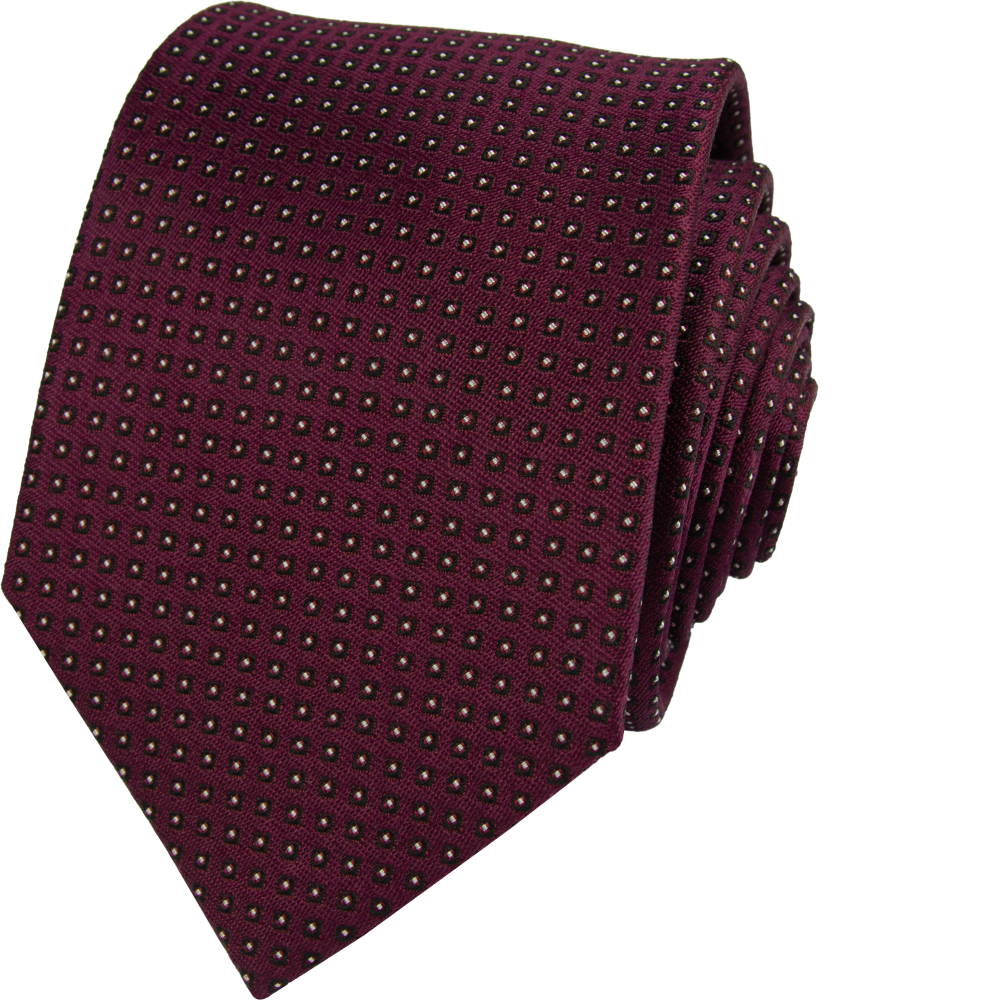
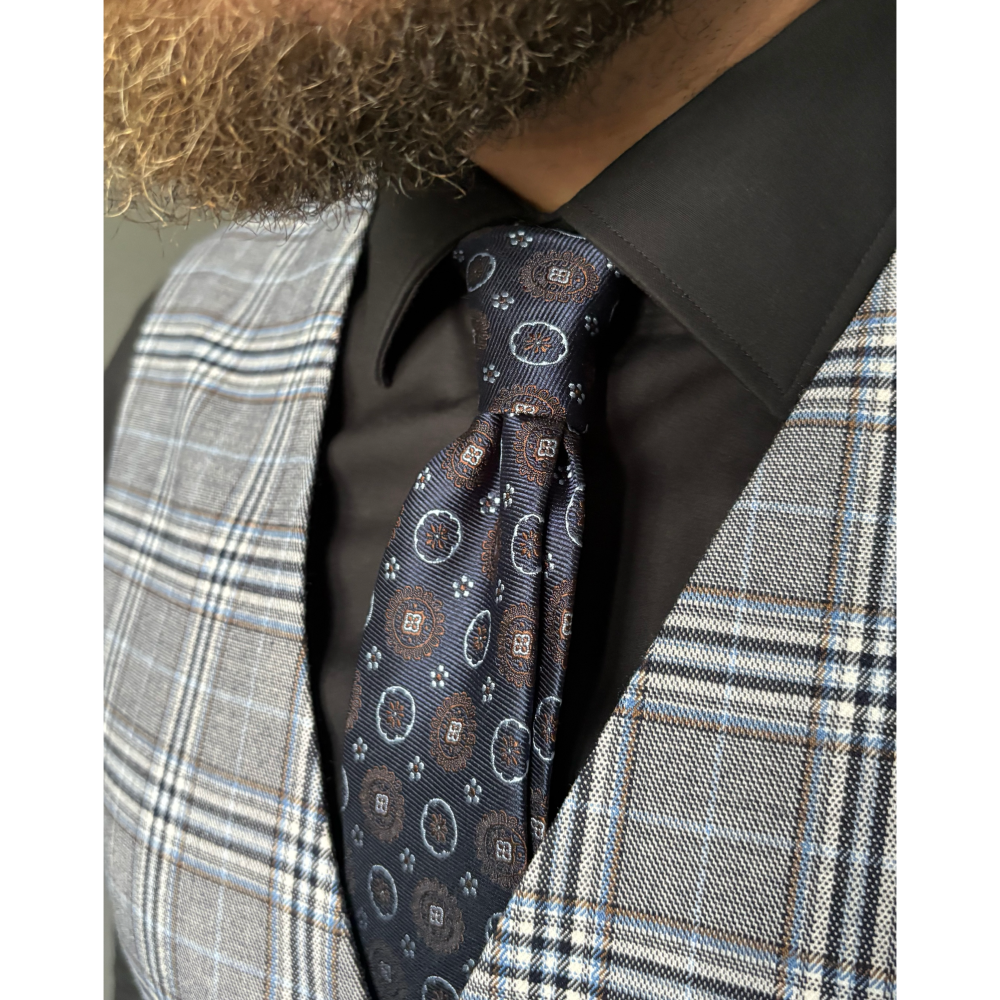
For those whose work involves client meetings, presentations, or any situation where first impressions carry weight — a silk tie does quiet but consistent work. It signals attention to detail without being loud about it. Dark navy with a brown accent pattern reads as confident and approachable. A dark grey textured silk works well if you want something serious without being stiff.

How to care for a silk tie so it lasts
The single most damaging thing you can do to a silk tie is stuff it into a drawer or a bag still knotted. Always untie it fully after wearing — don't just loosen and pull over your head. That repeated strain on the same point of the fabric is what shortens its life faster than anything else.
After untying, either hang it loosely or roll it gently from the wide end and store it flat. Give it at least a day between wears — silk is a natural fibre and it recovers from creasing on its own when allowed to rest. Most light wrinkles disappear overnight without any intervention.
For cleaning, spot-treat small stains immediately with a damp cloth and cold water. Don't rub — blot gently and let it air dry. Dry cleaning is the safest option for anything more serious. A light steaming (not direct iron contact) can refresh the drape beautifully. With this kind of basic care, a quality silk tie worn three times a week can easily last five to seven years in excellent condition.
Which silk tie colours work best for the office
If you're building a silk tie collection for work, start with colours that rotate well across your existing suits. For most men, that means two or three reliable anchors: a dark navy, a burgundy or deep wine red, and a neutral like dark grey or charcoal. From there you can add personality with pattern and texture rather than bold colour choices.
A burgundy silk tie with a subtle blue pattern is one of the most versatile pieces a man can own — it goes with navy, grey, and even a well-chosen brown suit. A wine-red tie with applied detailing brings just enough visual interest for a client lunch without crossing into territory that feels too festive for a Monday morning.


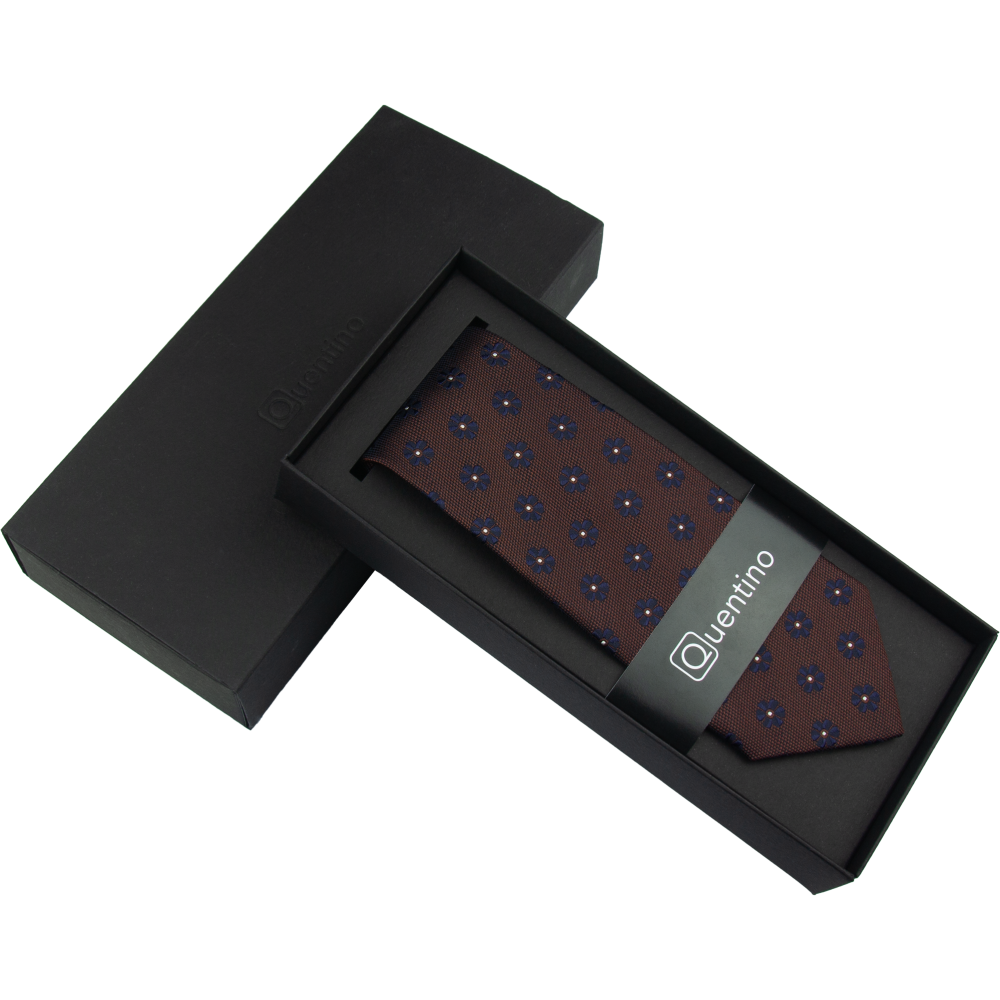
If you prefer something that leans more classic and understated, a dark navy tie with applied detailing or a brown floral silk are both excellent choices for more conservative offices. They hold their own in serious environments while still showing that you put thought into how you dress.

Mistakes that shorten the life of your silk tie
Storing it knotted
This is the most widespread one. Leaving a tie knotted overnight — or worse, slipping it on and off repeatedly without untying — creates permanent tension at the knot point. Over time, the interlining compresses and the silk distorts in a way that can't be fixed. Untying takes twenty seconds. It's worth it every time.
Using a hot iron directly on the silk
Direct heat from an iron can permanently flatten the natural texture of silk or leave shiny marks that don't go away. If you need to smooth out a crease, use steam from a distance or the bathroom steam method mentioned above. Always place a thin cloth between the iron and the tie if you must use one.
Being too cautious about patterns at work
Many men stick exclusively to plain ties for the office because they're afraid a pattern will seem unprofessional. In practice, a subtle paisley or a small geometric print in a dark tone adds visual depth without drawing the wrong kind of attention. A dark navy paisley silk actually reads as more sophisticated in a boardroom than a plain navy polyester — the pattern works in your favour.
Buying one tie and wearing it too frequently
Even silk needs rest. Wearing the same tie three days in a row doesn't give the fibres time to recover fully. Two or three good silk ties in rotation will last far longer than one tie worn constantly — and your colleagues will notice the variety.
Frequently asked questions
Is a silk tie appropriate for everyday office wear?
Absolutely — it's arguably the best choice for daily office use. A quality silk tie with a proper interlining handles regular wear well, and the natural drape and sheen make it look better in professional settings than most synthetic alternatives. The key is choosing colours and patterns suited to your environment: darker tones with subtle patterns work in almost every office context.
How long does a silk tie last if worn regularly?
With proper care — untying after each wear, rotating between ties, occasional steaming, and dry cleaning when needed — a well-made silk tie can last five to seven years of regular use. Customers who follow these habits often come back to us not because their tie wore out, but because they want to add to their collection.
What suit colour goes best with a silk tie for work?
Navy and charcoal suits are the most versatile base for silk ties at work. A dark navy silk tie pairs cleanly with both a navy and grey suit. Burgundy or wine-red silk works particularly well against navy and mid-grey. For a brown suit — which is having a genuine moment right now — a dark navy tie with a brown accent, or a warm burgundy, creates a combination that looks intentional and modern.
Can I wash a silk tie at home?
We don't recommend it. Machine washing — even on a delicate cycle — can distort the interlining and permanently change the shape of the tie. For small stains, blot with cold water immediately. For anything more significant, take it to a dry cleaner. The cost of dry cleaning once or twice a year is far less than replacing a tie that lost its shape in a washing machine.
What is the difference between a silk tie and a polyester or microfibre tie?
The main differences are in how they look, feel, and age. Silk has a natural lustre that photographs well and reads as premium in person. Polyester and microfibre ties are more affordable and easier to clean, which makes them a practical choice for occasional wear or for anyone starting out. For men who wear a tie regularly to work, silk is the better long-term investment — it simply holds up better and keeps looking good.
Ready to invest in a tie that actually earns its place in your wardrobe? Browse all Quentino silk ties — hand-sewn in the Czech Republic, built for regular wear.
Shop silk tiesMade with care in the Czech Republic since 2013
David, Petra & Tobi — Quentino